

Learn / The drop family: gravity is the board
The drop family: gravity is the board落としの考え方
Columns, parity and the threats you set up for later.
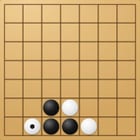 Drop Four
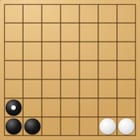 Ring Drop
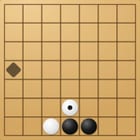 Hole Drop
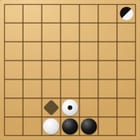 Hot Drop
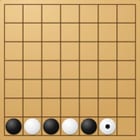 Clear Drop
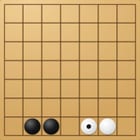 Giveaway Drop
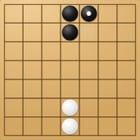 Edge Drop
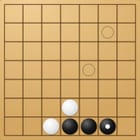 Wormhole Drop
Threats are stored, not played
A threat in a drop game is an empty point that would complete your four, sitting above stones that have not been played yet. It cannot be taken until the column fills to just beneath it. So the game is about which threats are stacked where, and who is forced to fill the column below.
Two of your threats in the same column, one directly above the other, is decisive: whoever fills to the lower one loses it, and the other side then has the upper. Two threats in adjacent columns on the same row are nearly as good.
Parity
- On a board with an odd number of columns and an even number of rows, the player who moved first will fill the last point of an even row and the second player the last point of an odd row, if both play out. So threats on odd rows favour one side and even rows the other. Count the rows from the bottom and remember which are yours.
- The middle column is worth the most: every horizontal and both diagonals pass through it.
The variants
- Ring Drop: the edges join. A three at the right edge threatens the left; do not think of the sides as safe.
- Hole Drop and Hot Drop: the random squares change parity for their column. Work out which rows they push your threats onto before you commit to a plan on that side.
- Clear Drop: a full bottom row vanishes and everything drops. A stored threat one row up becomes playable at once, and one on the bottom row disappears. Time the clearing.
- Giveaway Drop: play away from lines. The rule against playing on top of the opponent's last stone means you cannot be forced into a four by a single column; count the safe moves left, as in a game of nim.
- Edge Drop: the board fills from the outside in. Lines along the edges come early; lines through the centre come last, and the centre is where the game is decided.
- Worm Drop: the two wormhole mouths join the board to itself. A line that reaches one mouth carries on from the other in the same direction, so a column or diagonal far from your stones may be next to them. Read every line through the mouths before you call a position safe.