

Learn / Ninuki-renju: two ways to win
Ninuki-renju: two ways to win二抜きの考え方
Captures change the value of every shape. Threats can be taken apart, and pairs are points.
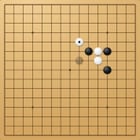 Ninuki-renju
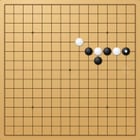 Sannuki-renju
Never leave a pair with an open end
Two of your stones side by side with an empty point at one end and an enemy stone at the other are a capture waiting to happen. Every pair you make, ask where the flank is. Three in a row cannot be captured, which makes a three far safer than a pair.
Moving into a flanked position is safe: only the stone that closes the trap captures. So a pair between two enemy stones is not in danger; it is the empty end you watch.
Capture as defence
- A four can be broken by capturing one of its stones. Before you block a four, look for the capture: it takes the stone away and gives you a pair towards the win.
- An open three built from a pair plus one can often be captured out of existence rather than blocked.
- Five pairs win outright. At three or four captures, every capture threat is as forcing as a four.
The Pro opening
Black's second stone must leave the central 5×5. It is the tournament rule for a reason: the first player's advantage is larger in the capture game than in plain gomoku, and the exclusion takes some of it back.
Sannuki-renju: triples fall too
- Three in a row is no longer safe. A three with an empty point at one end and an enemy stone at the other is exactly as exposed as a pair. Only a four cannot be taken.
- The count is in stones, fifteen to win. A triple is worth half again a pair, so an opponent who has left a three flanked is the first thing to look at.
- Because threes are capturable, an open three is a weaker threat than in the pair game: your opponent may answer it by taking it, and gain three stones. Build fours from pairs plus one rather than from threes plus one where you can.